In 2025, Canadian Lawyer, along with its sister publications Australasian Lawyer and NZ Lawyer, has recognized many deserving lawyers and law firms for their outstanding performance.
The Global Best in Law 2025 pays tribute to all those who have navigated the increasing role of AI, legislative changes, and economic challenges for clients.
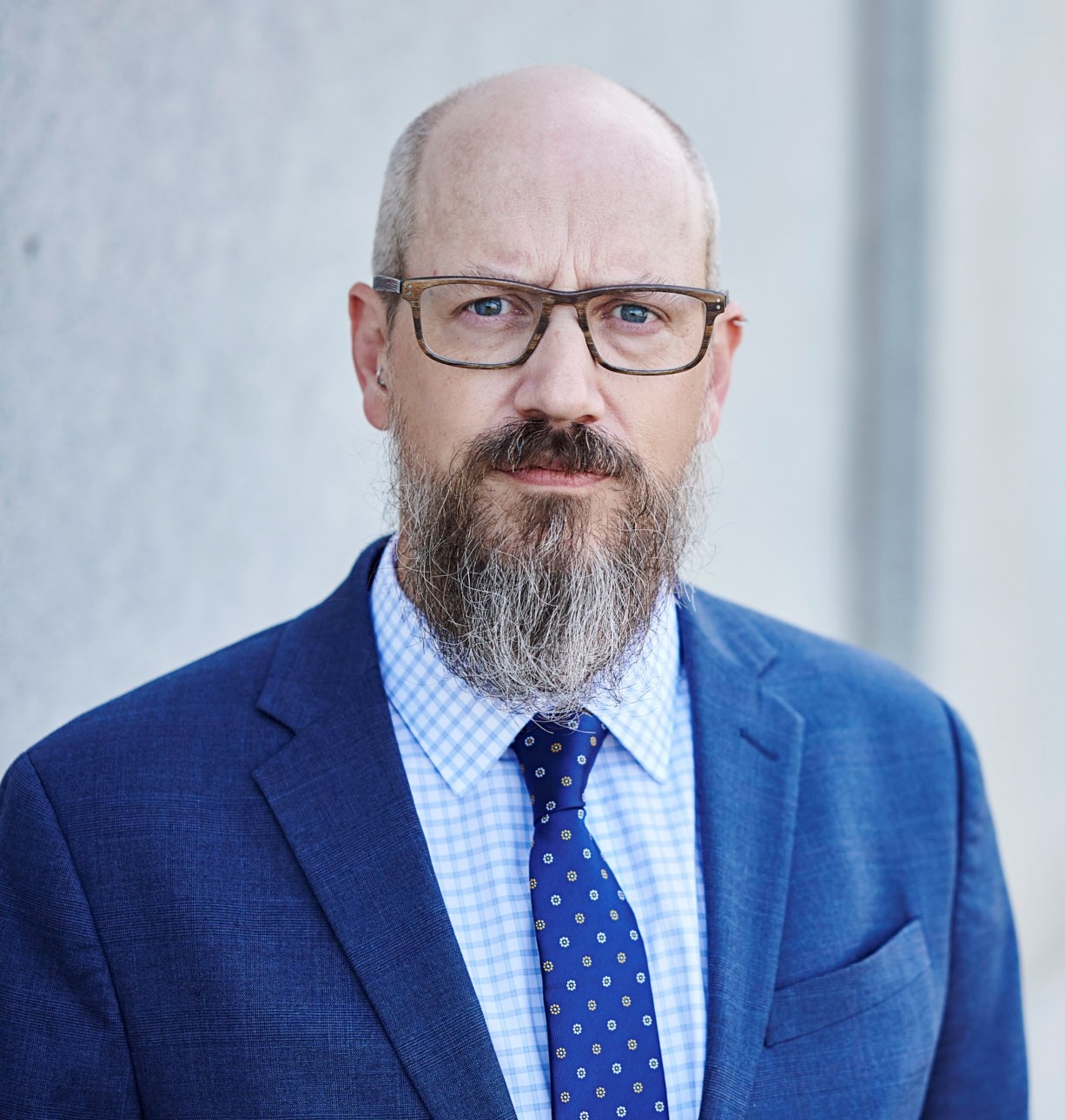
Michael Spratt, an acclaimed criminal defence lawyer, podcaster, and legal commentator in Canada, highlights some of the issues facing the sector.
“The lack of court capacity and the delays in criminal proceedings have been a major challenge. Evidence and the criminal process, unlike a fine wine, doesn't get better with age. Witnesses’ memories fade and accountability becomes more distant,” he says.
With AI being used to generate fictitious arguments or phantom cases, Spratt maintains that all leading lawyers are vigilant against this risk.
“It's easy to hold people accountable. It's hard to hold the computer algorithm accountable, especially when we know that AI and large language model algorithms are particularly susceptible to systemic issues of discrimination, disadvantage, bias,” he explains.
While it can often be taken for granted, Spratt believes there's a need to ensure access to justice is maintained. Regardless of the type of case, every individual deserves that basic right.
Spratt adds, “If the public doesn't believe the justice system is actually delivering justice, we risk losing a very important and foundational aspect of our democracy.”
Here, four law firms spotlight their year and the initiatives that have enabled them to be honoured by their peers and recommended by clients.
Story of 2025:
Groundbreaking litigation representing Canadian school boards against Meta, TikTok, and Snap over the impact of social media on student mental health.
The firm achieved a significant legal victory, allowing the case to proceed and setting a new precedent in Canadian litigation.
Leveraging its strengths in personal injury and medical malpractice, the firm is expanding into mass torts and environmental cases, aiming to drive systemic change and broaden its impact nationwide.
Managing partner Greg Neinstein describes the firm’s work against the social media giants as “one of the most important litigations of our time” and “the new big tobacco.”
The firm represents the majority of school boards in Ontario, alleging that the companies have knowingly changed their algorithms to impact children. However, there was a motion to say the case couldn’t proceed as the school boards were not the actual users of social media.
“We won the motion and while we didn’t win the case, what the judge said was, ‘I want to hear about this,’” explains Neinstein. “There should be enough information available to allow us to proceed to the next step of the litigation, so that was a huge hurdle because it really is changing the landscape of litigation in Canada.”
Taking on such a case also marks out 2025 as the culmination of a lot of hard work as it put Neinstein Personal Injury Lawyers up against the world's biggest law firms with vast resources, representing the largest global firms.


“The fact that we were able to go into the ring with these guys and at least show that we are on a par with them, or able to fight them tooth and nail, was really rewarding and satisfying,” adds Neinstein.
This type of high-profile work is only possible because of the firm’s core pillars of personal injury and medical malpractice cases. Success in these areas gives it the financial freedom to pursue other avenues, along with opening doors to partnerships with US firms and a new understanding of non-class-action mass torts.
Especially during the last year, Neinstein secured a judgment of $17 million for a young woman who lost her limbs as a baby, and negotiated a favourable settlement for a set of triplets who all have CP.
Neinstein says, “The fact that we have our core pillars of business and it supports these new initiatives, it shows that it takes a village. We look at it as a collaborative approach. This success doesn’t happen overnight; it was built over time.”
Neinstein didn’t necessarily plan to lead the firm to where it is in 2025. As things change, he reassesses his goals and remains flexible. Following the pandemic, he built out the firm’s downtown central Toronto office, and the resulting collaborative atmosphere has become a big part of the day-to-day.
This is how the firm, while socializing, heard news involving Meta and decided to take on the social media case.
“Someone said, ‘There’s a conference in Vegas,’ and next thing you know, we’re down in Vegas. Next thing, we’re representing all the school boards. Those things would not have happened if we were all at home.”
The firm’s development over the past year is an extension of Neinstein’s approach of actively wanting to be the weakest person in the room. He encourages the team to challenge, critique, and have healthy dialogues that push them all forward.
“Having that mentality allows you to have other smart people around without being afraid that they’ll take over the room,” adds Neinstein. “I want to now continue using those skill sets to broaden our ability to go into new litigation that impact tens of thousands or even hundreds of thousands of people and make change for the better.”
Story of 2025:
Grown and diversified notably with its leadership in sensitive practice areas, especially sexual abuse and medical malpractice/birth injury.
Broadened its role in conferences and community outreach, and in using technology and AI to cope with new civil procedure reforms and heavy workloads.
Sustained high performance by supporting staff well-being in a trauma-heavy practice and ensured its community impact extends beyond litigation results.
Managing partner Charles Gluckstein is particularly satisfied with how the medical malpractice team has performed in 2025.
He says, “I’m really excited about solidifying that group and, for me, their bench strength is one of the strongest in Canada.”
Extending its reach, Gluckstein Lawyers ran four successful conferences over the last year, with an audience composed of lawyers, adjusters, opposing counsel, and survivors of trauma.
For almost 20 years, they have organized one such event that trains professionals and treatment providers about compassion fatigue.
Another was the inaugural Sexual Abuse Lawyers Alliance conference, which Gluckstein admits is sadly needed. The event aims to equip lawyers with the tools to be better prepared.
“Historic sexual abuse is unfortunately quite common as we’ve learned from the Catholic Church, and now we’re learning more from Children’s Aid. Also, as mental health becomes something that people are focusing on, which may have been suppressed before, more cases are coming out,” he says.

The firm also ran its Risky Business conference on “Medical Malpractice in a New Era,” along with an event for sexual abuse survivors.
“It’s a great way to educate and show the leadership that we bring in those practice areas. We started them virtually and most of them are now in person with some virtual options, but the attendees like to come and network,” says Gluckstein. “We’re doing it for the Birth Injury Lawyers Alliance next year and plans are underway for that.”
Over the last five years, the firm has grown from 25 to 62 people – including six lawyers, bringing the total to 22 – which has necessitated looking after everyone.
Gluckstein and the leadership team ensure social workers and psychologists are accessible, along with taking everyone away on a retreat to bond and help them cope with the emotional demands of working in their practice areas.
This commitment to looking after others extends to the 40 to 60 initiatives and local partnerships the firm is involved in. This encompasses the brain injury community, sexual abuse outreach with shelters, fundraising, and even publishing guides on financial management for those who receive settlements and on public resources for families living with children waiting for their lawsuit to conclude.
Gluckstein adds, “We’re very proud to do that. It’s not a monetary exchange; it’s something that we give back because we are part of the community. We call ourselves Full Circle Care, as for us it’s not just about the litigation.”
Story of 2025:
Significant achievements in personal injury and medical malpractice, resolving complex cases involving spinal cord, orthopaedic, and brain injuries.
The firm emphasized its commitment to continuous improvement, leveraging AI as a research tool while maintaining rigorous legal standards.
Anticipating legislative changes in 2026, the team is preparing for an active year.
Founder and managing partner Richard Bogoroch has proven himself an advocate for AI and appreciates its effect. Over the past year, the Toronto-based firm has sensibly explored this.
“We’re certainly not using it to write legal documents. That would not be appropriate at this stage,” he says. “It’s a tool that assists lawyers and makes sure they are aware of recent medical developments in science and in the areas that are the matters of litigation. It assists lawyers in making sure that they are current, up to date, and have the correct information.

This desire to stay ahead of the curve is built on the firm’s platform of a deep sense of mission and responsibility to injured victims, with a culture that values conviction, grit, and never taking recognition for granted.
“We fight on behalf of injured victims and have to be tenacious, determined, and persistent,” says Bogoroch.
Being honoured for its 2025 performance enshrines the firm as a serial winner with a collection of awards already under its belt. Avoiding complacency and keeping standards high is easier said than done.
Bogoroch adds, “We don’t falter in our determination to obtain justice and that drives us to make sure we are getting our clients the compensation they are entitled to. That is our abiding goal, which motivates us every single day, because a lot of people are suffering without the compensation that we can get them.”
Story of 2025:
Addressing the loss of in-person interaction, the firm invested in collaborative office spaces and social events, fostering engagement among staff and clients.
The adoption of AI has improved efficiency and legal research, with roles evolving rather than being eliminated.
Continued investment in technology and people, along with a focus on inclusive culture, underpins the firm’s sustained success and future growth.
Principal partner Patrick Brown wanted to turn back time. He recalls his formative years, socializing with colleagues, sharing meals, resolving cases, and helping one another.
Concerned that those benefits are out of reach in today’s remote working era, Brown and the leadership team designed a lounge for all staff to enjoy. It has been used to invite other law firms to events like euchre tournaments. Other social activities include baseball tournaments, cocktail nights, canine day, and karaoke.
“We’re trying to see other lawyers and have that personal contact, and I can tell you the younger lawyers love it,” Brown says.

Most of the firm’s lawyers come in five days a week due to McLeish Orlando’s environment and inviting culture.
Brown explains, “Whether it’s the law students and the lawyers or other staff members, they can interact by using places like the lounge and other social areas to have more integrative conversations instead of looking at each other on the screen.”
However, while this has raised spirits, it has also had a direct impact on the firm’s performance across 2025. Being able to share experiences and lessons has led McLeish Orlando’s team to better understand AI.
The firm turns down around 95 percent of the cases it is offered due to being at capacity, but the lawyers feel they could increase that and maintain quality by using AI correctly.
For example, Brown was surprised to learn that in one of his cases in the Court of Appeal, a key witness was identified by a student knocking on doors, whereas in the past, they would have conducted library research – a task that now requires less time due to AI assistance. And as with the motivation behind its office environment, McLeish Orlando is putting its people above all else.
“I don’t think we’re going to lose good staff. Their roles are going to change, and they won’t be doing what I did earlier in my career,” says Brown. “It’s changing times, but I must say I’m excited by how we’re embracing it, and hopefully, it’s going to guide us to where we want to get to next year, the year after, and the year after that.”

















Pro Bono Ontario (PBO) is an access-to-justice charity founded in 2001. PBO’s mission is to harness the skills and commitment of volunteer lawyers to address low-income Ontarians’ unmet civil law problems — helping them lead secure, healthy, and productive lives. PBO delivers on this mission by developing and directly managing pro bono programs that enable lawyers to provide high‑quality legal services to those who cannot afford a lawyer or qualify for government‑funded legal assistance. Since its creation, PBO has provided direct legal services to 300,000 clients who had nowhere else to turn for their everyday legal problems.